
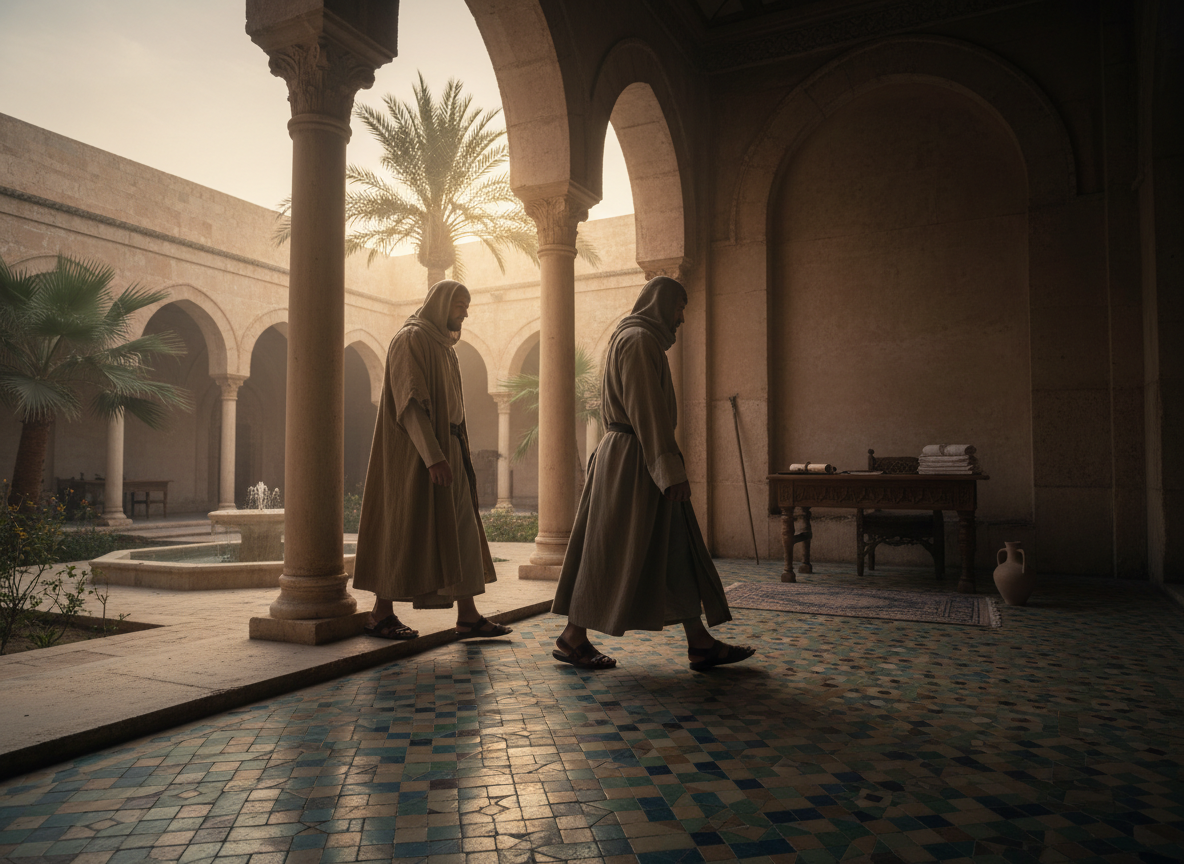
Long before step counters, cardiovascular guidelines and gym memberships, physicians were asking a familiar question: how should a person move in order to preserve health?
For Ibn Sina—Avicenna in the Latin medical tradition—exercise was not merely recreation. In Al-Qanun fi al-Tibb, The Canon of Medicine, movement formed part of the regimen for preserving health.
What Ibn Sina actually wrote about exercise
Modern historical reviews of the Canon identify a dedicated discussion of riyadah, or exercise, in its first book. Ibn Sina argued that appropriately timed and moderated exercise could help preserve health and discussed physical inactivity within the medical framework of his era as something that could contribute to illness.
That historical claim should not be exaggerated. Ibn Sina explained the body through medieval concepts of heat, digestion and accumulated materials. We should not rewrite his physiology as though he had discovered modern cardiovascular science or metabolism.

Exercise was part of a wider regimen
Ibn Sina’s writings also linked exercise with preparatory and restorative friction or massage. A historical analysis of the Canon describes several forms of massage, including preparatory friction before exercise and restorative friction afterward.
Again, this belongs to the history of medicine. It tells us how a major physician of the Islamic world thought about movement and recovery. It does not prove that every medieval explanation or technique has been validated by modern clinical trials.
Then there is the Sunnah—and it is a different category
A description transmitted from ‘Ali رضي الله عنه portrays the Prophet Muhammad ﷺ as walking briskly, leaning forward as though descending a slope. During tawaf, authentic narrations also describe the Prophet ﷺ performing ramal: walking briskly with short steps during the first three circuits before walking normally for the final four.
These narrations should not be converted into a modern exercise prescription. They describe the Prophet ﷺ and, in the case of ramal, a specific act of pilgrimage. They do not command Muslims to achieve a particular number of daily steps or prove a particular cardiovascular effect.
What modern medicine can say
Modern public-health guidance reaches its conclusions through a completely different evidence system. The World Health Organization recommends that adults undertake regular physical activity, including roughly 150–300 minutes of moderate-intensity aerobic activity each week—or the vigorous-intensity equivalent—along with muscle-strengthening activity on two or more days.

The Sunnah, the Canon and modern exercise science therefore belong to three distinct categories of evidence. The Sunnah preserves religious and biographical reports. Ibn Sina represents the history of medical thought. Modern guidelines draw on epidemiology, physiology and clinical research.
They should not be forced into saying the same thing.
Yet across more than a millennium, one practical idea remains strikingly familiar: a life without movement is not the ideal state of the human body.
Continue the journey
- Ibn Sina’s Six Foundations of Health
- Before the Laboratory: How Islamic Physicians Learned to Read the Human Body
- Start Here — The Forgetful Ones
Sources
- Avicenna the First to Describe Diseases Which May Be Prevented by Exercise
- The Massage Approach of Avicenna in the Canon of Medicine
- Jami‘ at-Tirmidhi 3638
- Sunan Ibn Majah 2950
- WHO Guidelines on Physical Activity and Sedentary Behaviour






























Leave a Reply