
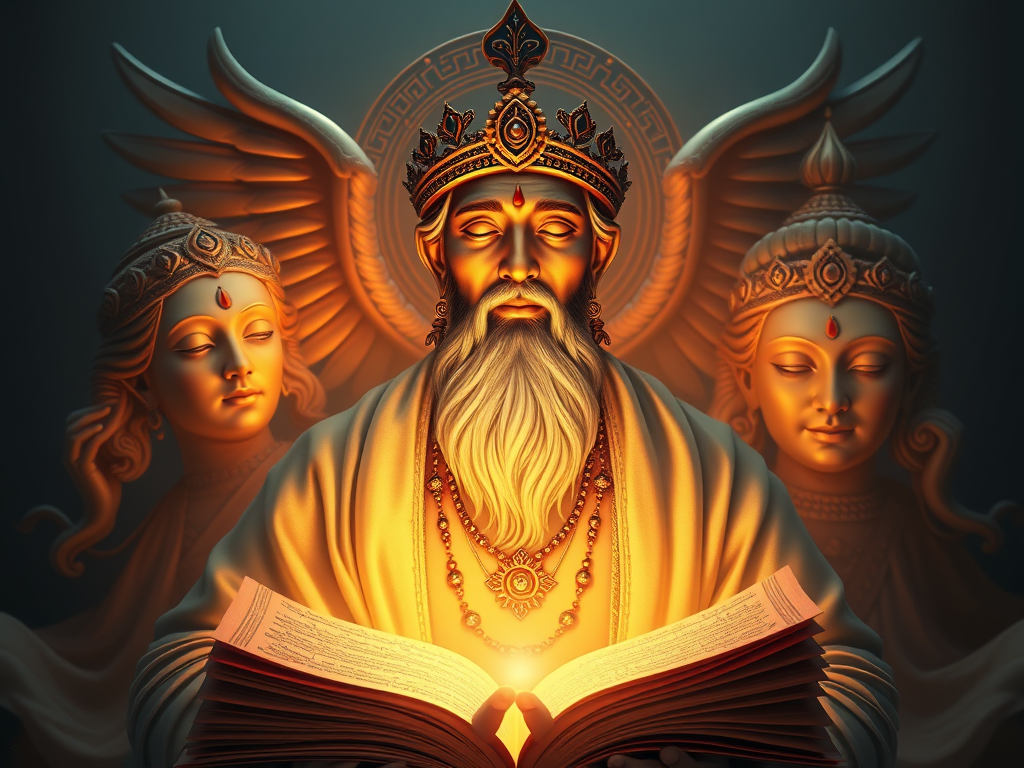
“Indeed, this is certainly in the former scriptures—the scriptures of Abraham and Moses.”
— Surah Al-Aʿlā (87:18–19), The Clear Quran
The Forgotten Revelation: Suhuf of Ibrahim
Islamic sources confirm that Ibrahim (A.S.) received divine scripture:
Surah Al-Aʿlā (87:18–19): “Indeed, this is certainly in the former scriptures—the scriptures of Abraham and Moses.”
Surah An-Najm (53:36–37): “Or has he not been informed of what was in the scriptures of Moses, and of Abraham who fulfilled [his obligations]?”
Though the content of the Suhuf Ibrahim is not preserved, remnants may survive in oral and symbolic traditions passed across lands.
Ibrahim’s Message: One God, Many Reflections?
Ibrahim (A.S.) acknowledged a single Creator who gives life, sustains it, and causes death:
Surah Al-Mulk (67:2): “[He] who created death and life to test you…”
Surah Ash-Shu’ara (26:78–80): “[He] Who created me and guides me… Who gives me food and drink…”
These align remarkably with the divine functions in the Vedic Trimurti: Brahma – the Creator, Vishnu – the Preserver, Shiva – the Destroyer.
Reference: Gavin Flood, An Introduction to Hinduism
Four Faces of Death and the Myth of Brahma
Malak al-Maut (Angel of Death) appeared to Ibrahim (A.S.) with four faces, signifying death’s omnipresence.
In the Vedic world, Brahma is depicted with four faces, symbolizing omniscient vision in every direction.
References: Atharva Veda, Puranic iconography, Farid Esack, The Essence of the Qur’an
Allah Doesn’t Translate Names
The Quran preserves names as they were: Ibrahim, Musa, Isa, etc.
Surah Maryam (19:54): “And mention in the Book, Ismail…”
Surah Maryam (19:56): “And mention in the Book, Idris…”
References: Neal Robinson, Names in the Qur’an; The Qur’anic Names of the Prophets
Protective Invocations: A Shared Spiritual Defense
Islam: “A‘ūdhu billāhi min ash-shayṭān ir-rajīm” (Surah An-Nahl 16:98)
Vedic: Rudra Sukta (Yajurveda); Gayatri Mantra (Rigveda 3.62.10)
References: Wendy Doniger, The Rig Veda; Radhakrishnan, The Principal Upanishads
Sabians, Magians, and Zoroastrians – Echoes of Tawheed?
Surah Al-Baqarah (2:62), Surah Al-Hajj (22:17) mention them as People of the Book.
Zoroastrians worship Ahura Mazda, a single supreme deity.
References: Mary Boyce, Zoroastrians; Encyclopaedia Iranica
All Religions Once Taught Islam
Surah Āl ʿImrān (3:19): “Indeed, the religion in the sight of Allah is Islam…”
Surah An-Nahl (16:36): “And We certainly sent into every nation a messenger…”
References: Fazlur Rahman, Major Themes of the Qur’an; Seyyed Hossein Nasr, The Study Quran
Final Hakikah: Islam Is the Original Religion
Surah Ash-Shura (42:13): “He has ordained for you the religion which He enjoined upon Noah…”
Every revelation pointed to Islam – submission to the One True God.
What’s Next in the Hakikah Series?
In the next episode, we’ll uncover the hidden science behind ‘magic’ in the Qur’an – quantum design, divine energy, and forbidden knowledge reinterpreted through modern eyes.
Share Your Thoughts
What do you think? Could ancient religions be fractured echoes of Islam? Comment below. Let’s continue the journey of unveiling Hakikah—truth long forgotten.
















Leave a Reply