

Long before the Jann rose and fell, and even before the jinn as we know them took form, there existed even older races—the Hinn and the Binn. These tribes are seldom mentioned in mainstream Islamic discourse, yet they echo in the early tafsir, in the margins of mystical writings, and in the oral traditions of desert peoples who whisper of a time before time.
🕯️ Who Were the Hinn and Binn?
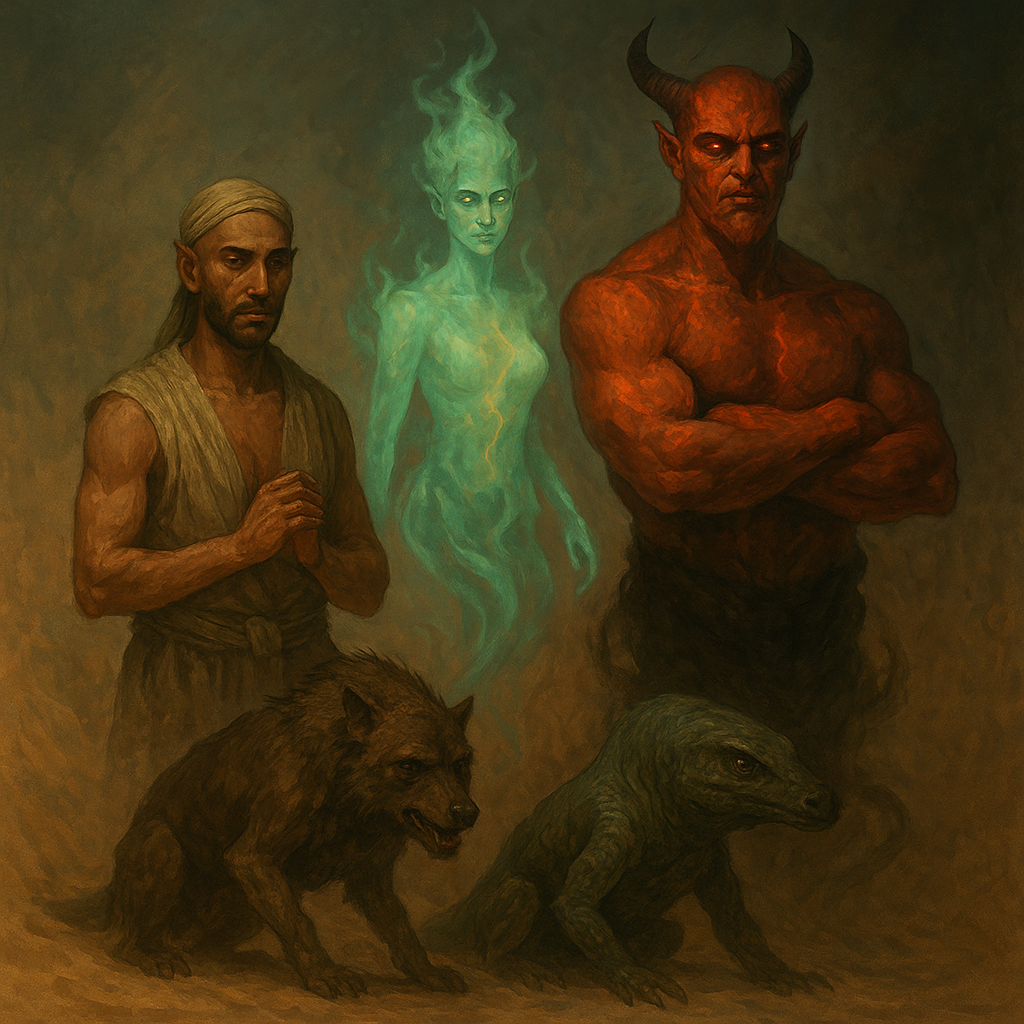
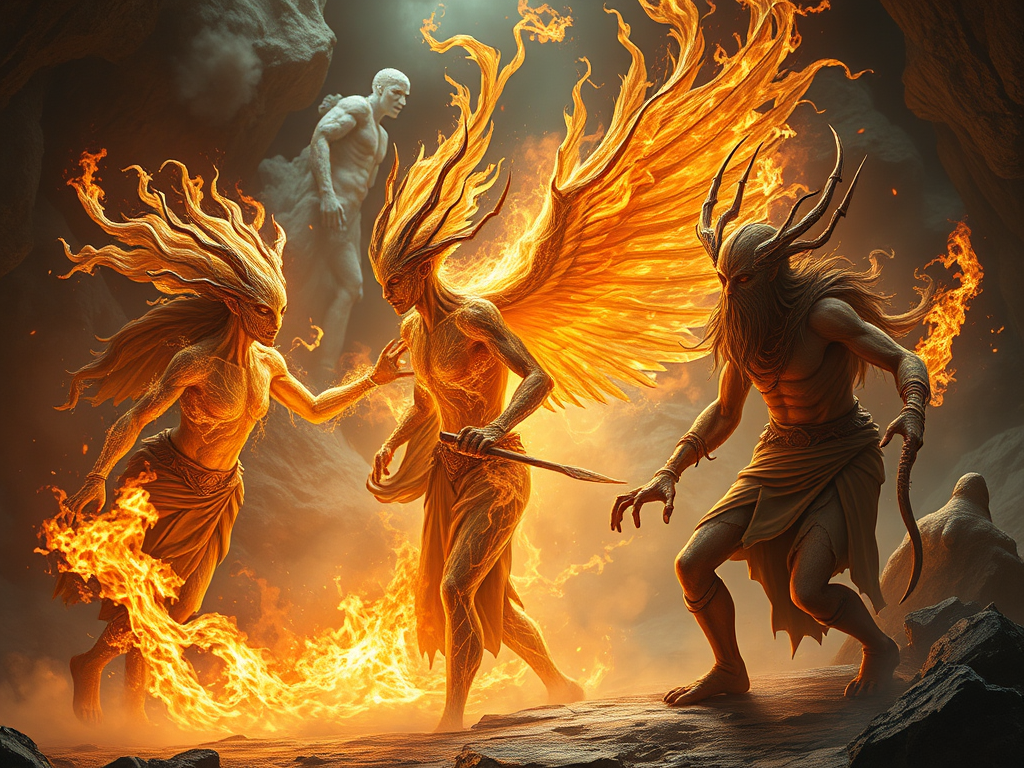
- The Hinn were believed to be beings of subtle, refined flame, lighter and more diffused than the chaotic fire of the Jann. Their element was air intertwined with fire, making them extremely fast, elusive, and ethereal.
- The Binn were seen as denser elemental beings, possibly tied to dust, wind, or residual pre-creation energy. Some describe them as soundless shadows, capable of flickering between dimensions.
These tribes were not bound to Earth alone. Early narrations suggest that they existed during the primordial formation of the heavens and the earth, when the throne of Allah was upon the water (Surah Hud 11:7), and the balance of creation was still being established.
🔍 Mentions in Tafsir and Tradition
- Ibn Kathir, in his Tafsir, refers briefly to Hinn and Binn in the context of the Earth being inhabited before the jinn, quoting older Israelite traditions that speak of ancient corruption.
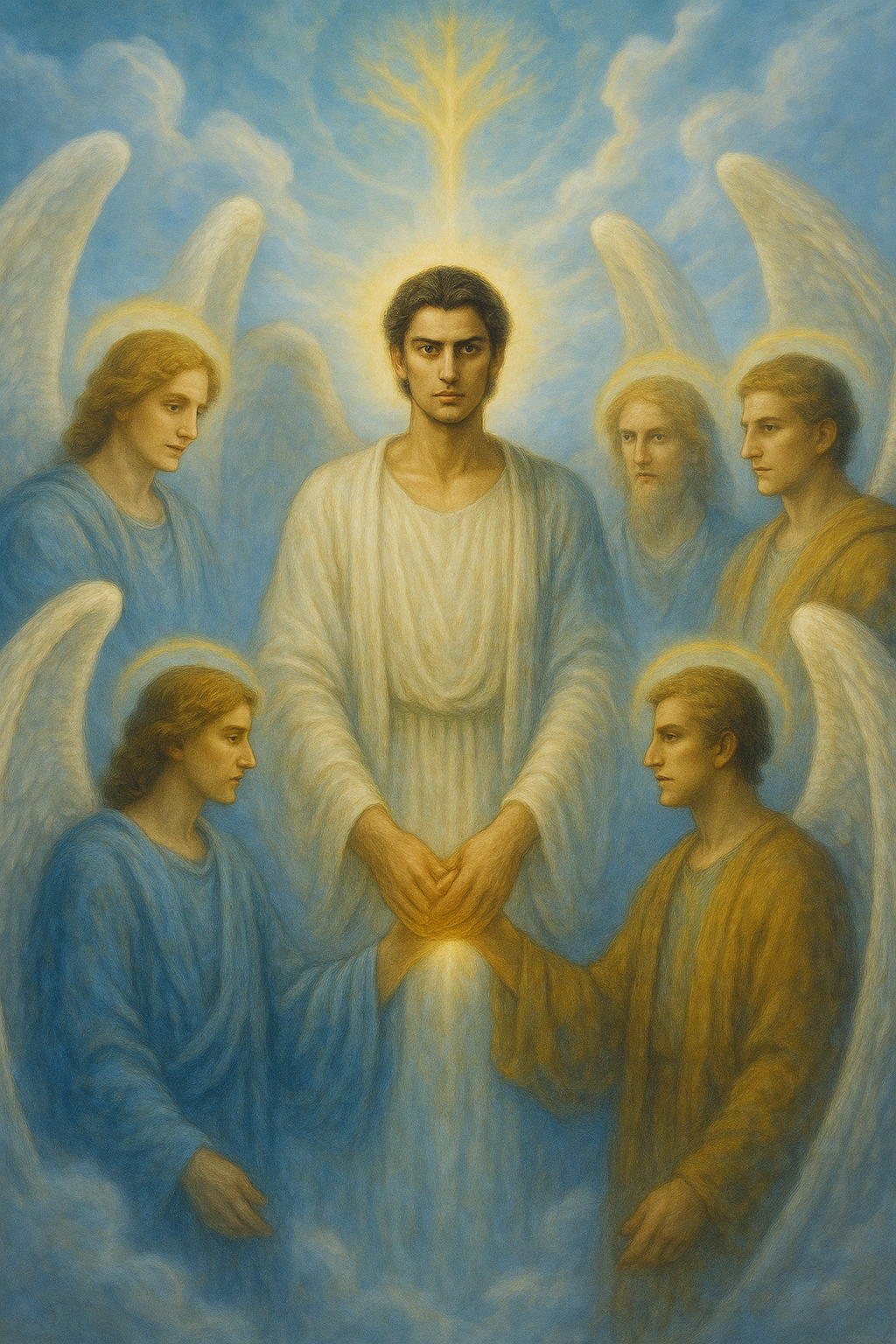
- Al-Tha‘labi and Al-Tabari make passing references to them when discussing the angels questioning Allah’s plan to place a khalifah on Earth (Surah Al-Baqarah 2:30).
- In some mystical writings, the Hinn are likened to beings who once carried the sound of the divine name across pre-physical space, while the Binn were the shadows that formed in resistance.
🏹 The War Before All Wars
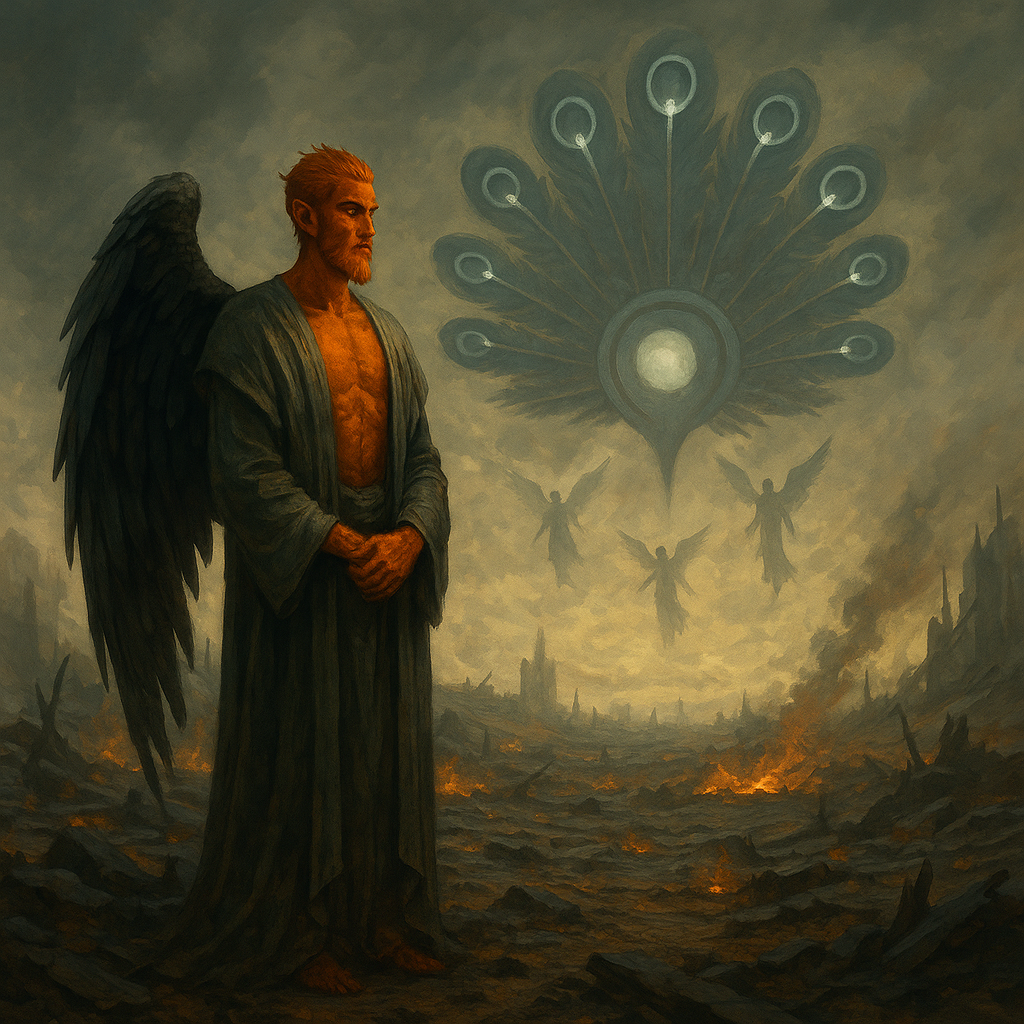
Long before the angels were sent to battle the Jann, the Hinn and Binn had already clashed. Their ancient war was said to be one of sound versus silence, flight versus form, until their essence became unstable.
- Some believe the Hinn were absorbed into the upper atmosphere, and now exist only as wisps that influence lightning, mirages, or sudden winds.
- The Binn, darker and denser, are said to have retreated into stone and shadow, rarely manifesting, except in moments of deep cosmic imbalance.
🧭 Remnants in the Present Day – Echoes of the Unkillable
In Sufi tradition and oral legends:
- The cries of Hinn are said to echo in the desert wind before a sandstorm.
- The Binn may manifest in complete silence, in places where no life stirs.
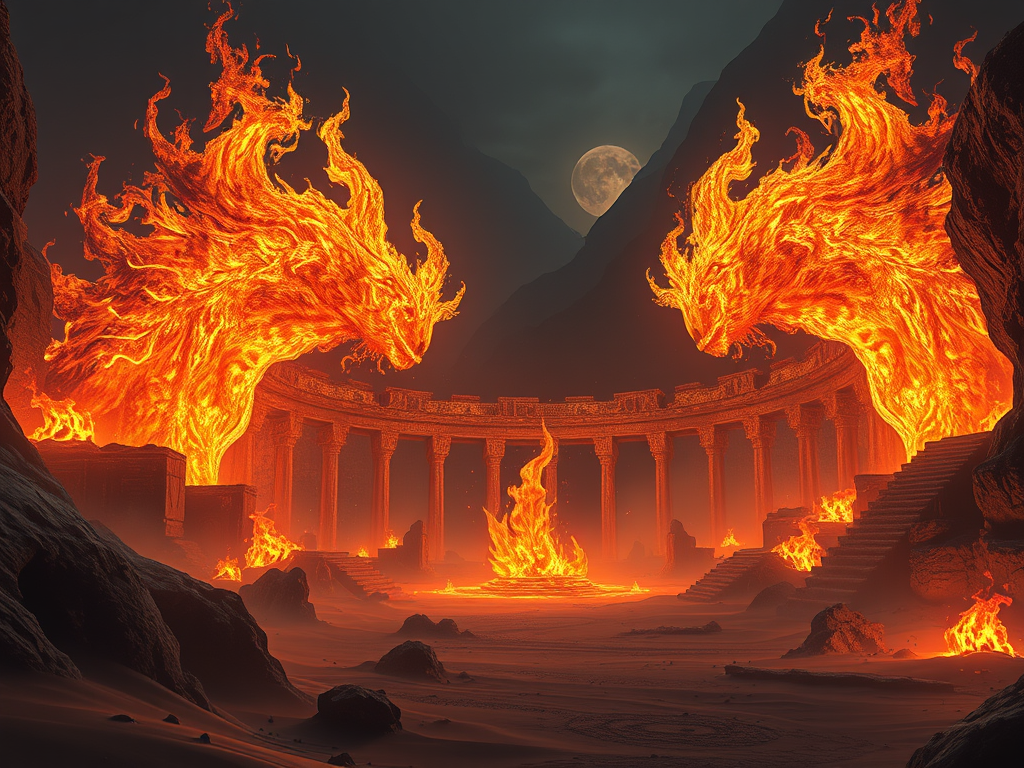
- Certain “thin places” of the Earth—forgotten wells, volcanic caverns, or ancient hollow trees—are believed to hold doorways where their presence still lingers.
Unlike the jinn, they do not tempt or possess. Their existence is not of trial or test, but of memory—as if Allah has kept their fading trace as a sign for those who reflect.
Modern thinkers and speculative theologians have occasionally drawn comparisons between these primordial beings and the concept of biological extremophiles—notably, creatures like tardigrades, which are able to survive radiation, vacuum, and near-absolute-zero temperatures. One could imagine that the Hinn and Binn were spiritual or energetic analogs of such indestructible resilience—beings whose essence was tuned not to a single ecosystem, but to the very extremes of creation itself.
Could the tales of elemental beings who cannot be killed, only scattered or hidden, be rooted in a memory of forms that once moved with perfect adaptability between dimensions, atmospheres, and worlds? If so, the Hinn and Binn were not merely creatures of folklore—they were the living symbols of survival through transformation.
🪐 Echoes from Beyond Earth – The Tiamat Hypothesis
Among ancient Mesopotamian myths, Tiamat was described as a primordial goddess of chaos and saltwater—slain in a cosmic war by younger gods, her body forming the heavens and the Earth. Some researchers and spiritual thinkers suggest that this echoes a celestial memory—perhaps of a destroyed world in our own solar system.
Modern astrophysics notes a suspicious gap between Mars and Jupiter, now filled with the asteroid belt. Ancient Arab oral lore and esoteric cosmology speak of pre-Earth worlds or “lands of fire and wind” that may once have hosted elemental beings like the Hinn and Binn.
Could it be that the war between these two forgotten tribes was not just terrestrial—but interplanetary?
- That one or both tribes came from or warred over a now-lost celestial body—a planet shattered by divine decree or imbalance?
- And that their scattered remnants took root on Earth as spiritual echoes, elemental forces, or secret watchers?
If so, what we call mythology may in fact be cosmic memory—a distorted reflection of real celestial history passed down through encoded metaphors.
The name Tiamat, in Sumerian, is believed to derive from the word ti’amtum, meaning ‘sea’ or ‘the deep’, referencing the chaotic primordial waters. Symbolically, Tiamat represented disorder, the unshaped potential of existence—perhaps even a volatile planetary consciousness.
In contrast, the Arabic word Qiyāmah (القيامة) comes from the root q-w-m, which means to rise, to stand, or to establish. While some mystics interpret it as the moment when the true ‘value’ of deeds is revealed, its primary linguistic meaning is ‘resurrection’ or ‘the rising again’—the ultimate rebalancing of creation.
Though linguistically unrelated, both terms reflect vast cosmic shifts: Tiamat as a fall, Qiyāmah as a rise. The death of one world, the accountability of another. They may mark opposite poles in the eternal rhythm of divine order: collapse and judgment, chaos and reckoning.
📚 Sources and Inspirations
- Ibn Kathir, Tafsir al-Qur’an al-‘Azim, referencing Hinn and Binn in pre-jinn times
- Tafsir al-Tha‘labi and Al-Tabari on ancient inhabitants of Earth
- Surah Al-Baqarah (2:30), Surah Hud (11:7)
- Al-Jahiz, speculative discussions in Kitab al-Hayawan
- Sufi cosmology and oral Arab lore from Hadramawt and the Empty Quarter



















Leave a Reply