

Introduction
In the vast tapestry of religious narratives, some names echo through time, carrying stories intertwined with both faith and mystery. One such name is Uzayr. The Quran mentions that some Jews claimed Uzayr as the Son of Allah — a statement that has puzzled scholars and believers alike for centuries. But who was Uzayr, really? And could this figure be connected to the ancient Egyptian deity, Osiris?
Watch the Video:
Who is Uzayr?
The Quranic verse in Surah At-Tawba (9:30) states that some Jews claimed Uzayr as the Son of Allah, while Christians made a similar claim about the Messiah. Most contemporary scholars suggest that Uzayr is likely Saint Ezra, the biblical scribe and priest. Yet, historical records reveal no evidence of Ezra being worshipped as a god, neither among Jewish nor Samaritan traditions. This raises an intriguing question: If not Ezra, then who?
A Deeper Historical Connection
Some scholars propose that Uzayr might not be Saint Ezra at all but rather a figure from a much older cultural context. To understand this, we must revisit the historical roots of the Jewish people and their long-standing ties with Ancient Egypt.
- Abraham, the patriarch, was connected to Egypt through Princess Hagar.
- Prophet Yusuf (Joseph), known for his prophetic dreams, served as a minister in Egypt.
- Prophet Musa (Moses), famously raised as a prince in the Pharaoh’s court.
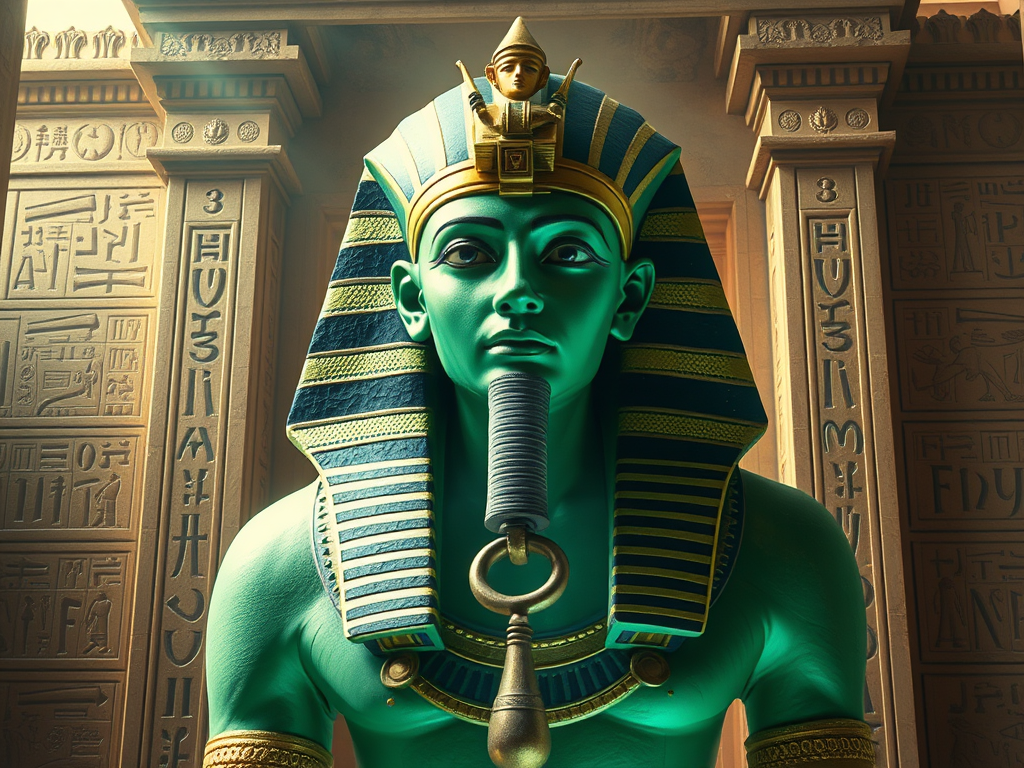
During these times, a deity named Osiris held a significant place in the Egyptian belief system. Interestingly, the name “Osiris” as we know it today is derived from Greek. However, in Ancient Egyptian, the deity’s name was likely pronounced as “Asar”, “Usir”, or “Wesir”. The pronunciation “Usir” (or “Uh-seer”) translates to “Mighty One” or “Seat of the Eye”.
This linguistic insight sheds new light on the Quranic reference, as the Quran only speaks the original pronunciation of names given in the text. Therefore, in the Egyptian tongue, “Usir” (or “Uzair”) directly reflects the original meaning of “Mighty One” or “Seat of the Eye”. This suggests that the Quranic mention of Uzayr could be accurately pointing to the ancient Egyptian deity rather than Saint Ezra.
The Osiris Connection
Osiris, revered as the “Lord of Eternity,” was associated with resurrection and eternal life. Followers of Osiris believed in consuming his symbolic “flesh” and “blood” to gain immortality — a ritualistic concept not far removed from the Christian Eucharist. Both Osiris and the Messiah figure were seen as “sons of God” who died, were resurrected, and offered everlasting life to their believers.
Is it possible, then, that the Quran’s mention of Uzayr as the “Son of Allah” refers not to Ezra but to an ancient belief rooted in Egyptian tradition? Could the Jewish connection with Egypt have subtly influenced this narrative?
Star of Sirius: A Celestial Symbol
One fascinating element is the reference to the star Sirius in Surah An-Najm (53:49), where Allah mentions Himself as the Lord of Sirius. Osiris is symbolically linked with the star Sirius, which rises in the east of Orion. This celestial association aligns Osiris with concepts of rebirth and immortality, mirroring some beliefs surrounding the Messiah.
Conclusion: A Historical Puzzle
The story of Uzayr, when examined through the lens of ancient Egyptian traditions, presents a profound intersection of faith and forgotten history. Could it be that the figure of Uzayr symbolizes a deeper, older belief system that predates both Judaism and Christianity? While the mystery remains unresolved, it serves as a reminder that history and faith are often intertwined in unexpected ways.
Call to Action:
If you found this exploration intriguing, follow our blog for more insights into the enigmatic connections between ancient traditions and modern beliefs.






















Leave a Reply