
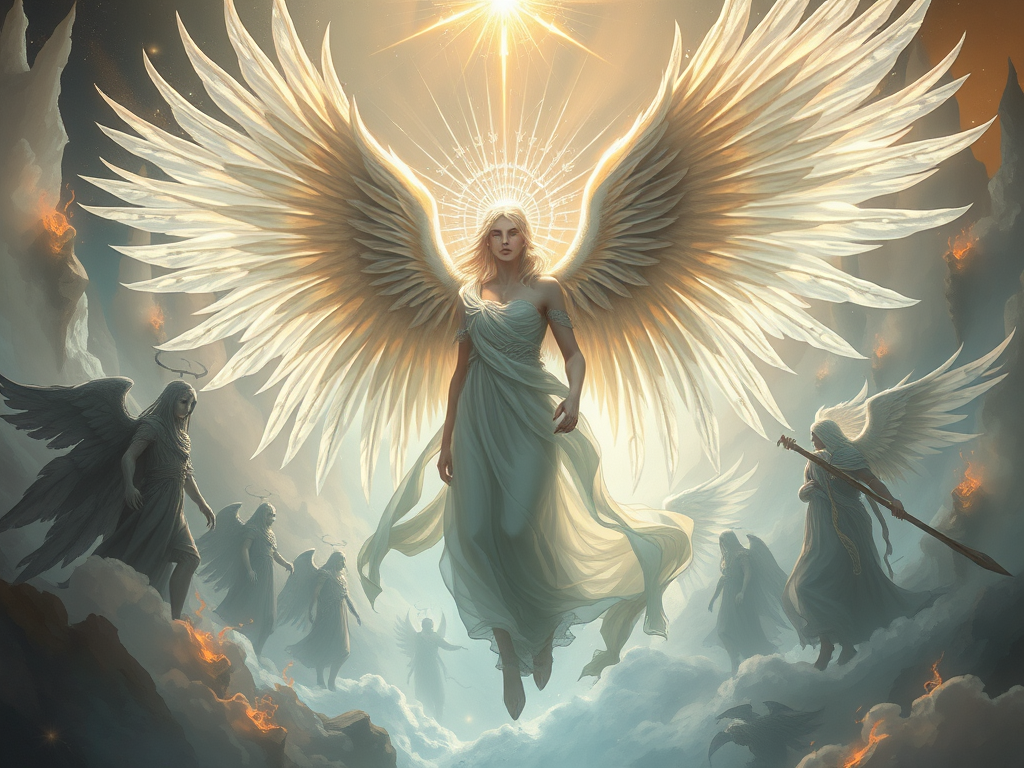
“Not all who shine with light are of light. Some walk among the obedient hosts, cloaked in proximity, yet burdened with choice.”
Insaan
In the vastness of the Divine realm, it is tempting to assume that those in proximity to light are themselves beings of light. Yet among the legions of celestial ranks—there are those who stand with the Angels, not as them. This post explores a rarely spoken distinction between the Mala’ika (Angels) and those who walk among their ranks—beings who share in their realms, missions, and sometimes even their appearance, but differ vastly in essence and purpose.
1. The Pure Nature of Angels
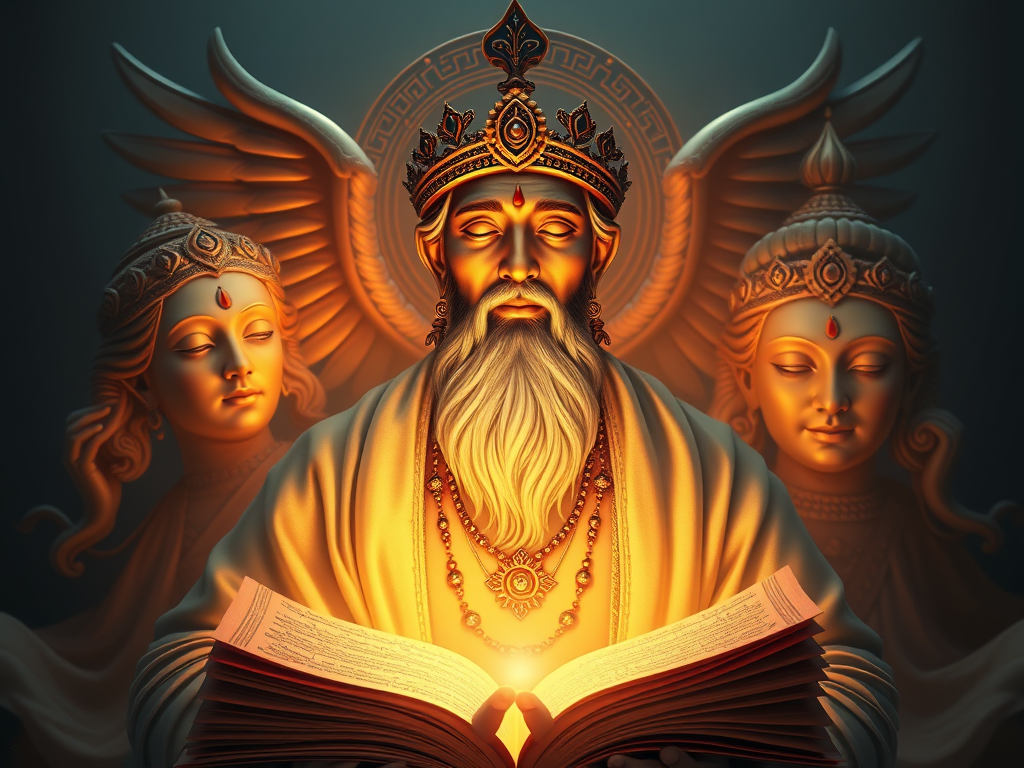
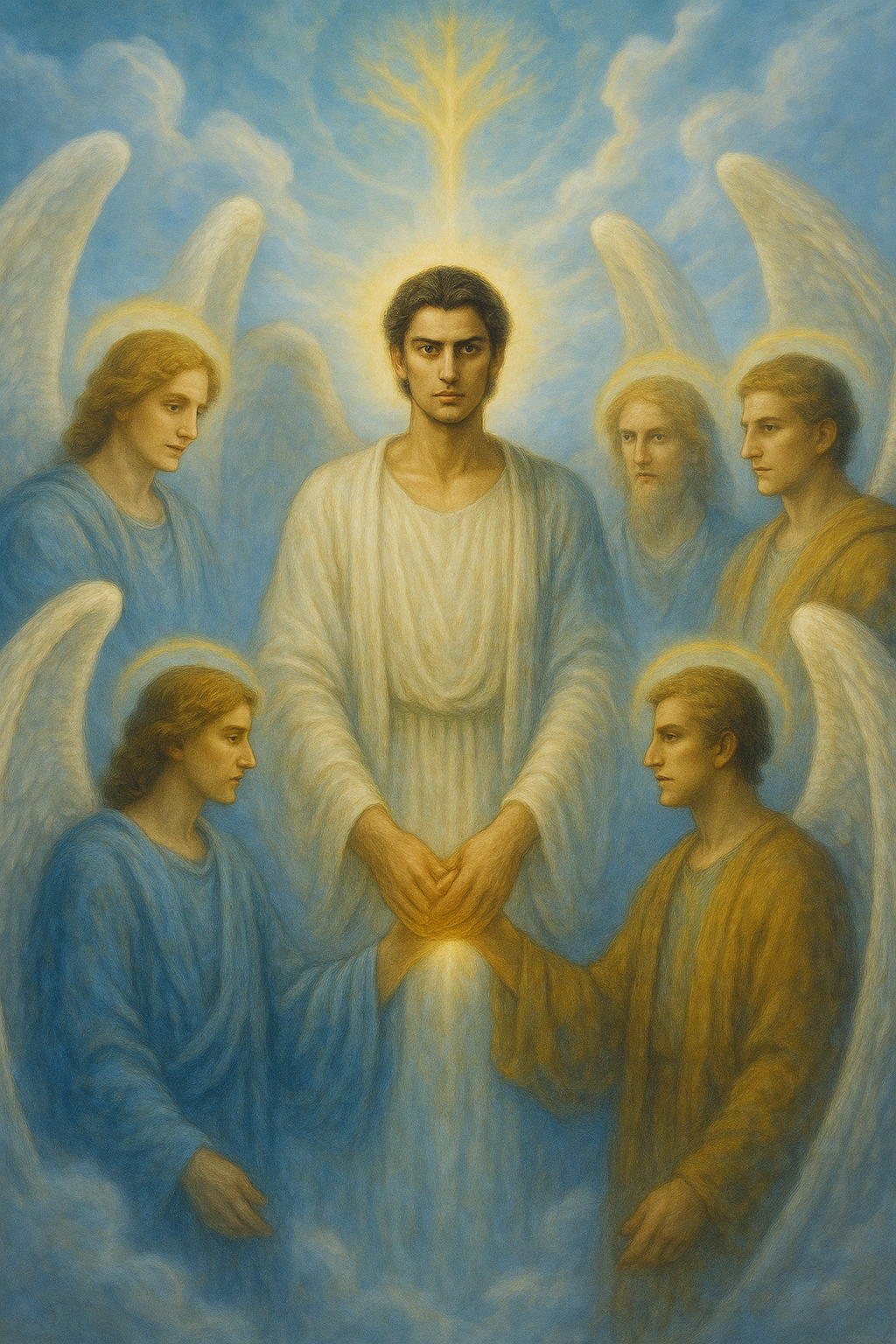
In Islam and other Abrahamic traditions, Angels are beings of light, fashioned by the Divine to be wholly obedient. They have no ego, no desire, no free will. They do as they are commanded—nothing more, nothing less.
“They do not disobey Allah in what He commands them but do what they are commanded.”
— Surah At-Tahrim (66:6)
They exist in ranks, each assigned to specific tasks:
- Archangels like Jibril (Gabriel), Mikail (Michael), Israfil, and Azrael.
- Guardians of humans and the heavens.
- Recorders (Kiraman Katibin) who note our every deed.
- Angels of punishment and mercy—Munkar and Nakir, Malik of Hell, and Ridwan of Paradise.
- Bearers of the Throne—Hamalat al-‘Arsh.
These beings are without sin. Yet not every inhabitant of the heavens shares this unblemished nature.
2. Beings That Walk Among the Angels
There are others—powerful entities who share the same celestial proximity, yet are not angels in origin. Some precede mankind. Some precede time.
❖ Azazil (Iblis) — The Greatest Example
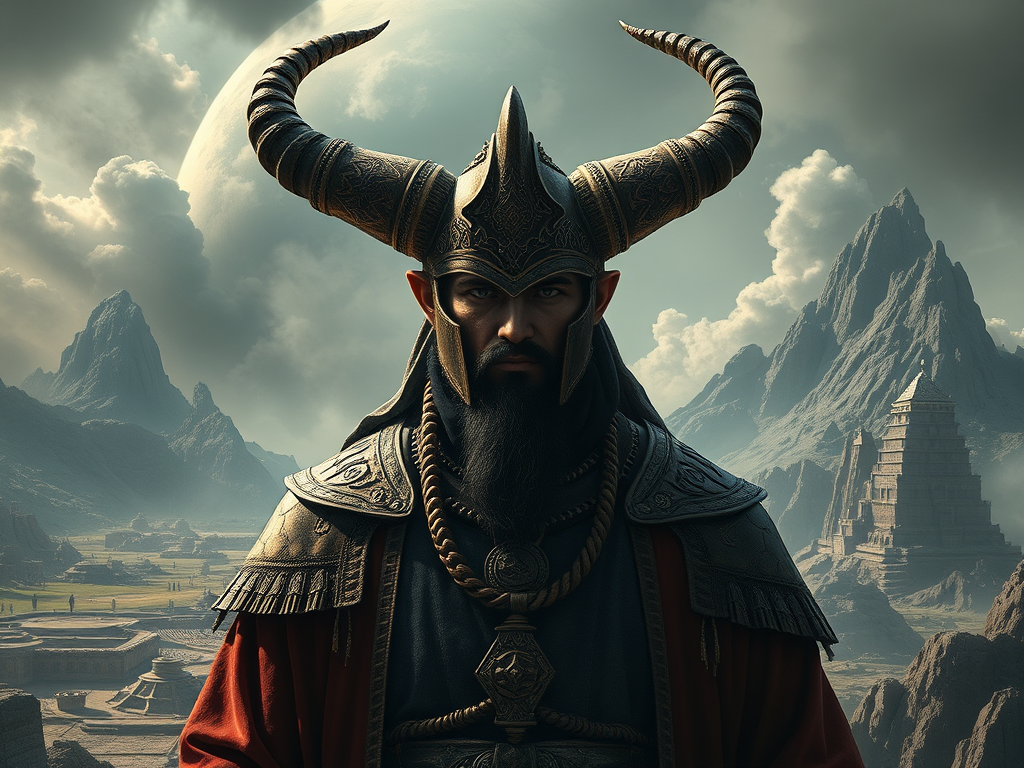
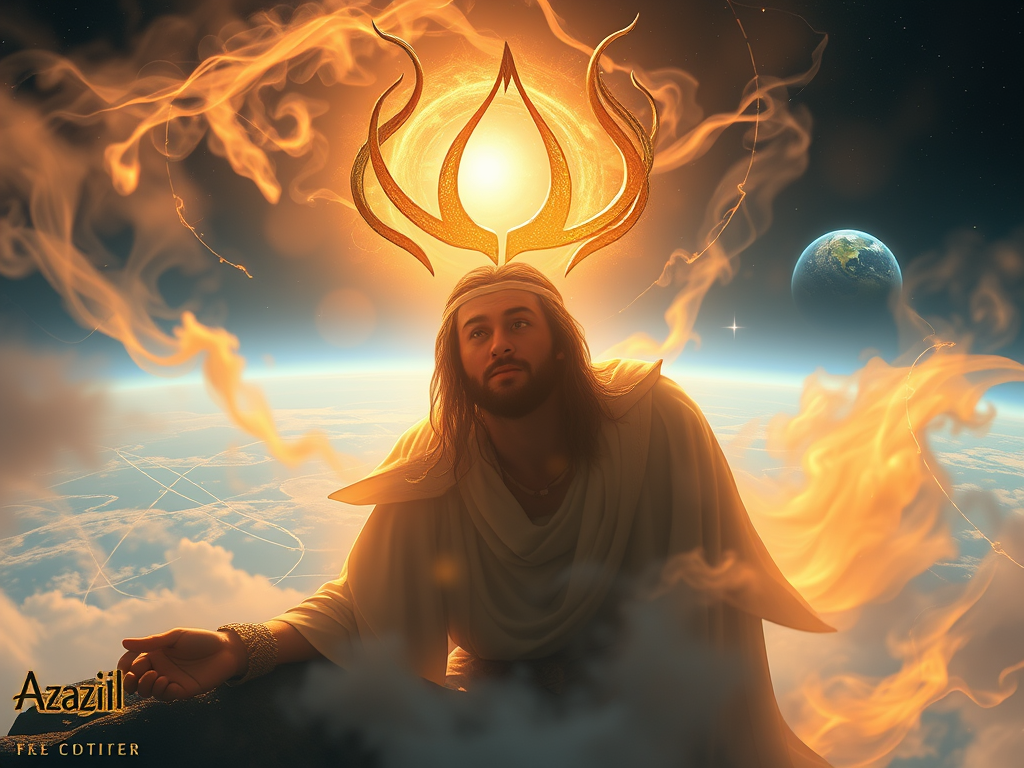
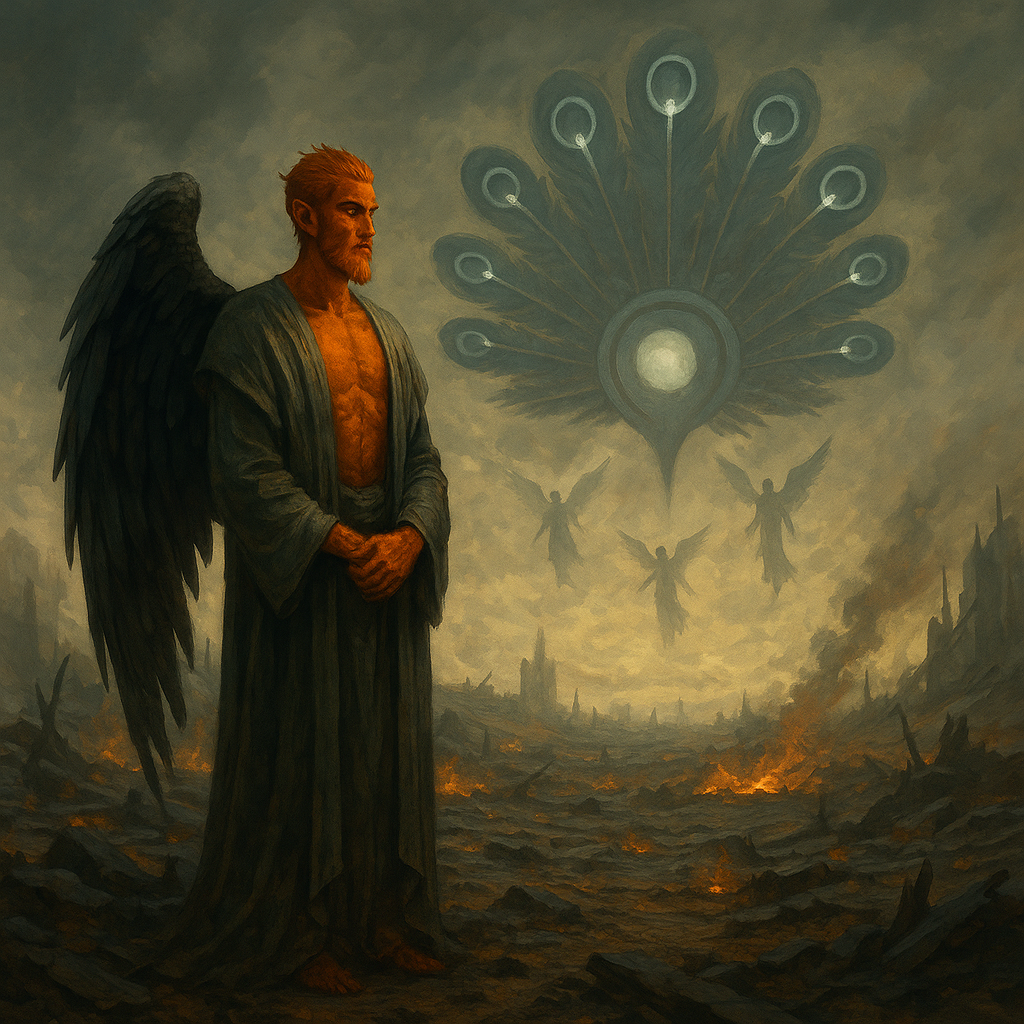
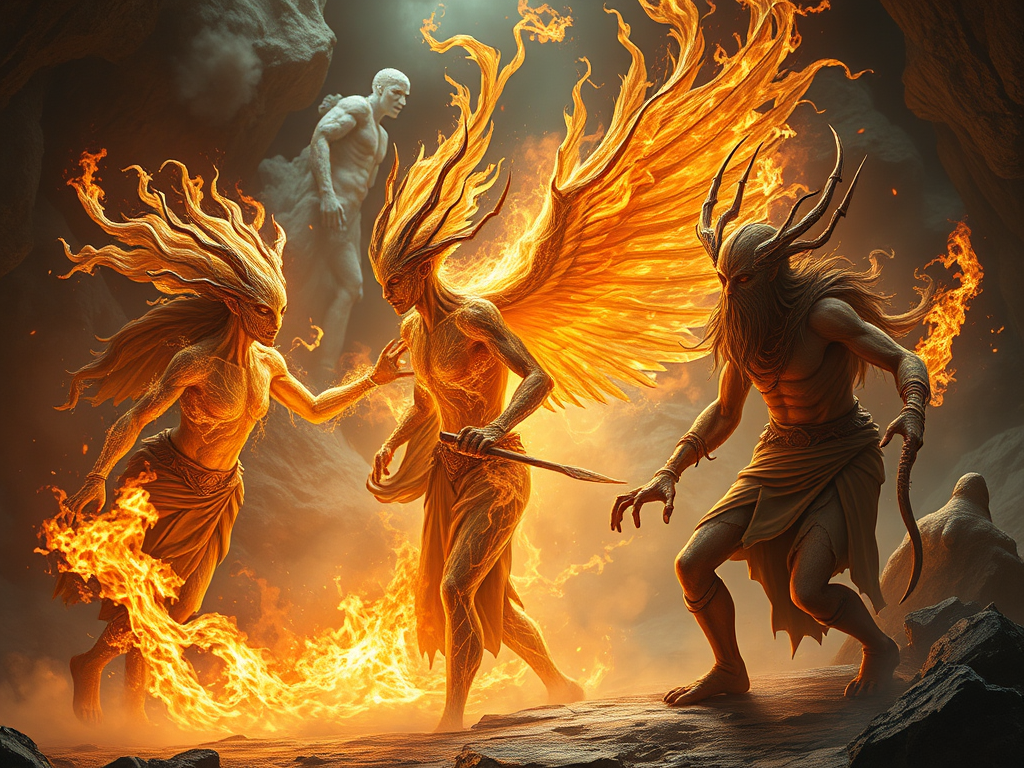
Perhaps the most infamous is Azazil, later known as Iblis. Once a devout worshipper among the heavenly ranks, Azazil was not an angel but a jinn, created from smokeless fire, not light.
“He was from the jinn, but he transgressed the command of his Lord.”
— Surah Al-Kahf (18:50)
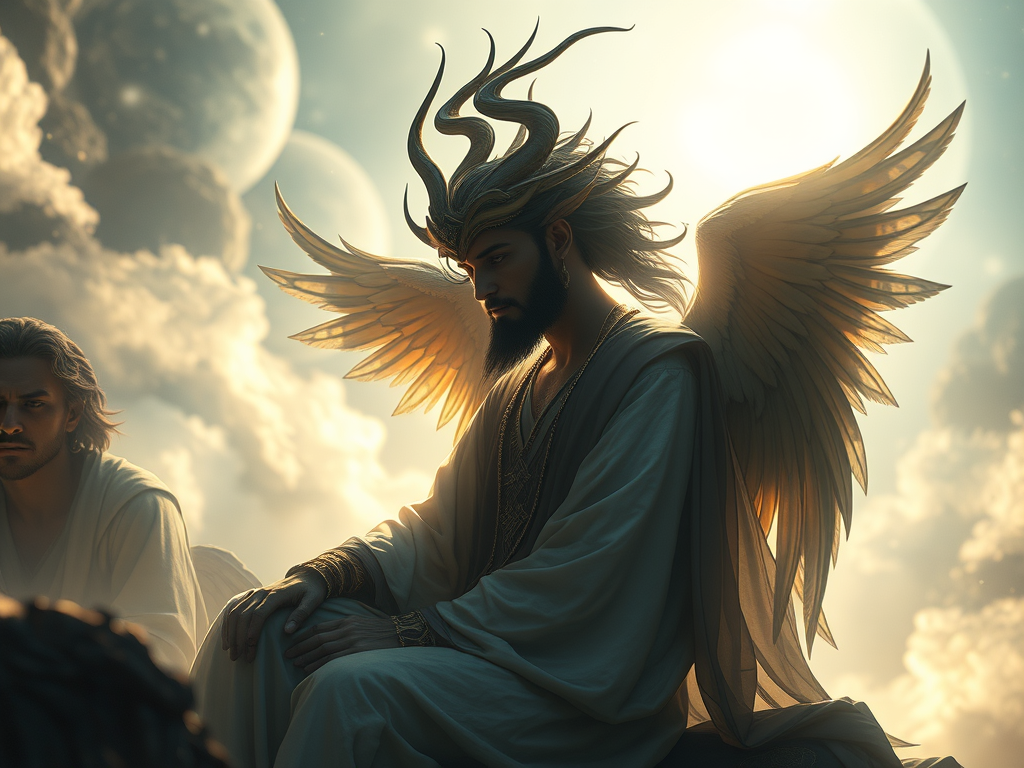
Though he walked among the Angels and was elevated to their ranks due to his worship, he had free will—and chose arrogance when asked to bow to Adam.
He is not alone.
❖ The Watchers (Grigori / Al-Raqibun)
In the Book of Enoch, an ancient Jewish text revered by early Christians and echoed in Islamic mystical thought, a group of 200 angels known as the Watchers descended to Earth. Their task: to oversee humanity.
But many among them lusted after the daughters of man, took them as wives, and bore the Nephilim—giants of chaos and corruption.
These fallen ones shared ranks with the angels, but were corrupted by desire. Among them, Azazel is named—the one who taught mankind warfare, cosmetics, and sorcery.
Though the Quran does not name the Watchers, similar figures emerge in Hadith and tafsir, often associated with angels who rebelled or were punished.
❖ Al-Muqarrabun (Those Brought Near)
In the Quran, there is mention of a select group known as Al-Muqarrabun—those brought near to Allah.
“And the forerunners, the forerunners – those are the Muqarrabun.”
— Surah Al-Waqi’ah (56:10-11)
These are not necessarily angels. Many Sufi interpretations see them as elevated human souls, saints, and prophets, who ascend ranks beyond even the angels, due to their gnosis, purity, and service.
They do not belong to the angelic realm, but move within it.
3. Comparative Table: Angels vs. Angelic-Walkers
| Aspect | Angels (Mala’ika) | Those Among Them (e.g., Azazil, Watchers, Muqarrabun) |
|---|---|---|
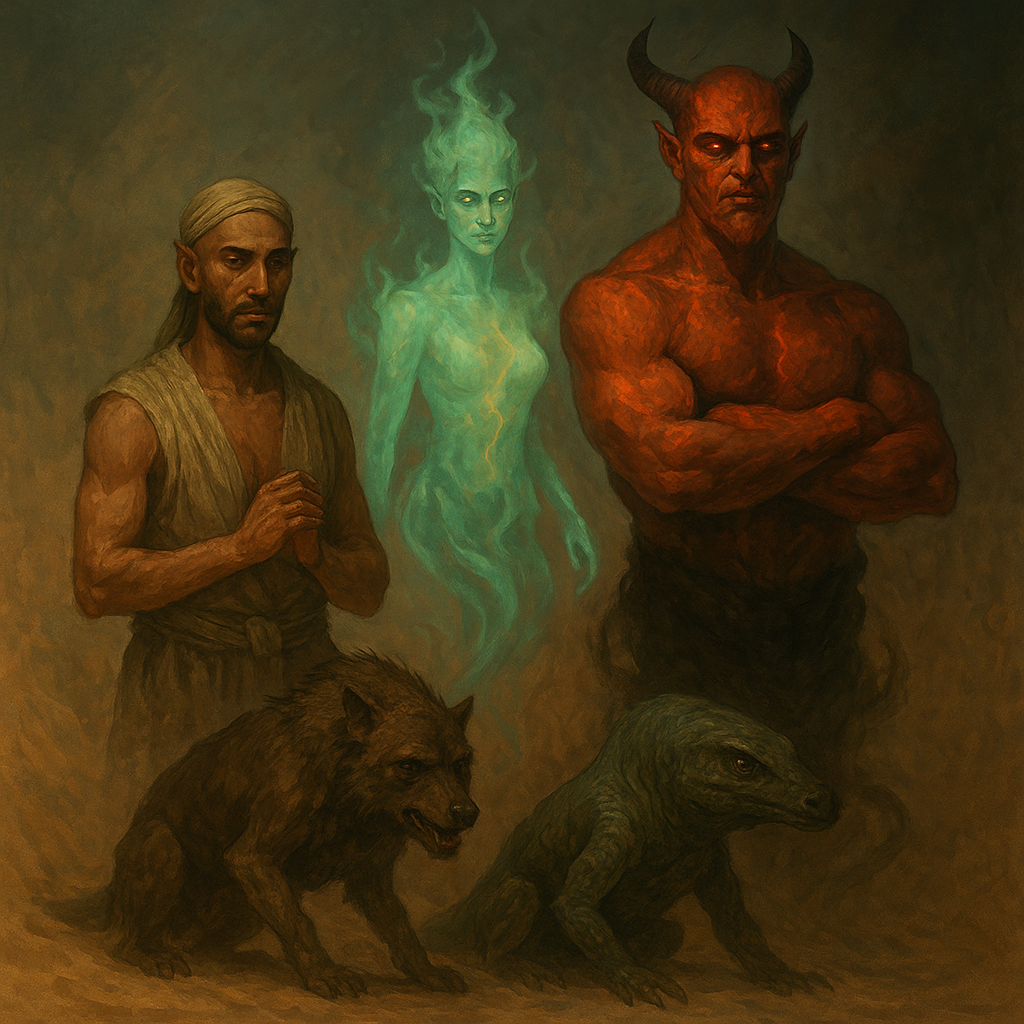
| Created from | Light | Fire (Iblis), Spirit, Unknown (Watchers, human souls) |
| Free will | No | Yes |
| Capacity to sin | No | Yes |
| Obedience to God | Absolute | Conditional |
| Function | Divine command execution | Mixed: watchers, rebels, mystics |
| Scriptural presence | Quran, Hadith | Apocryphal (Book of Enoch), Tafsir, Sufi texts |
| Destiny | Immutable | Variable — they may rise or fall |
4. Sufi and Esoteric Insights
According to Ibn Arabi and other great mystics, the human being has a potential to ascend through all the stations of creation.
In his Fusus al-Hikam, he writes:
“The Angels were created for obedience. Man was created for choice—and in that choice lies his journey to become more than even the Angels.”
The Insan al-Kamil (Perfected Human) stands above angels, not in creation, but in rank—because he chooses God over the self, despite the self.
In Sufi cosmology, there are beings of light, beings of fire, and beings of clay—but the heart transcends all these origins.
5. Closing Reflections
“To walk among the angels is not to be one of them. It is to carry the burden of will in a realm where none disobey.”
From Azazil’s fall to the Watchers’ rebellion, and to the spiritual ascent of the Muqarrabun, one truth becomes clear: Divine proximity is not always a sign of purity. Sometimes, it is a test.
Not all who dwell in heaven are free of error. And not all who rise from Earth are without light.















Leave a Reply