

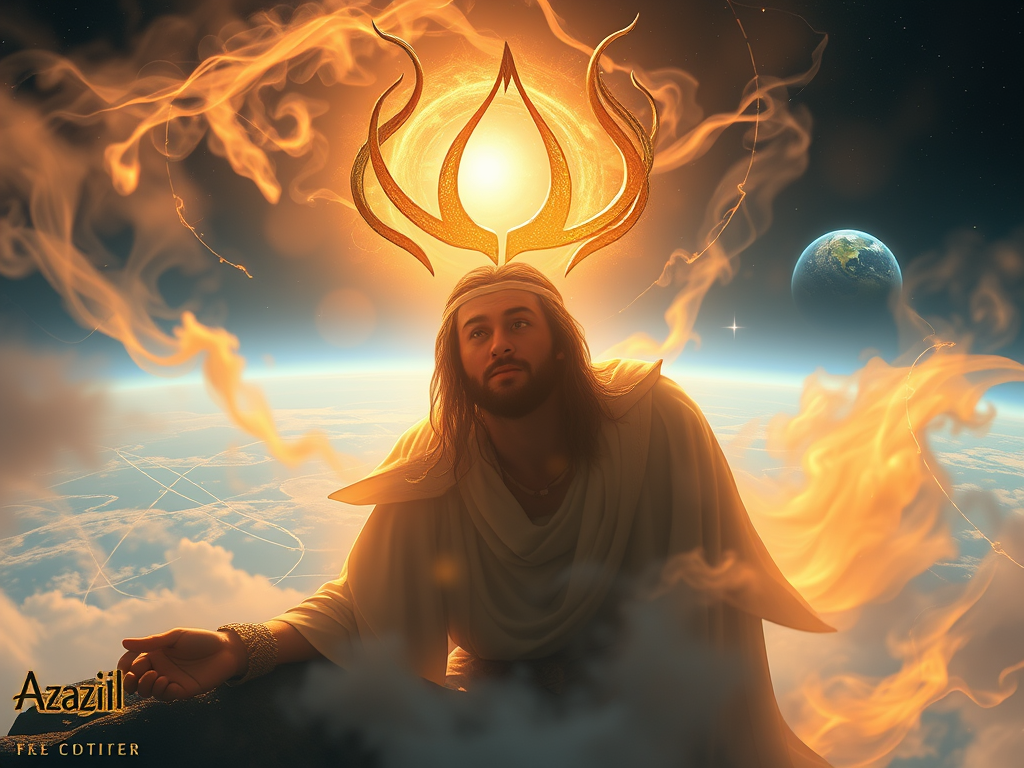
The form of clay lay still for what seemed like ages to Azazil. He observed it daily, with both fascination and contempt. It was perfect in shape, yet cold and unmoving. But then came the moment decreed since before time: the breath of life.
🌬️ The Ruh Descends
A wind unlike any other stirred across the heavenly realm. It was not of air or fire—it was Ruh, the divine command.
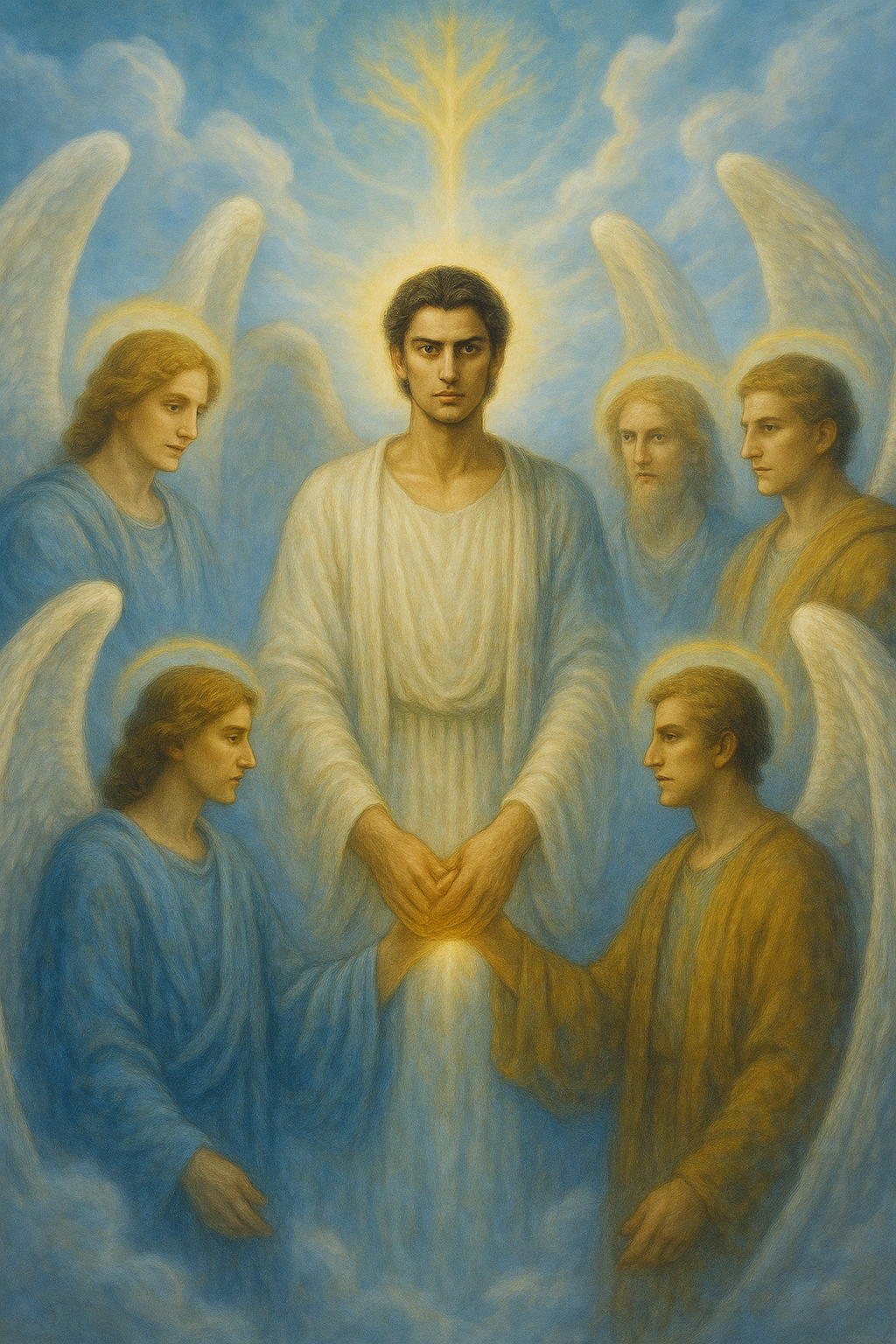
As the spirit was breathed into Adam, life entered him from the head downward. His eyes opened with the clarity of light, his chest lifted with breath, and the clay of Earth became animated with divine permission.
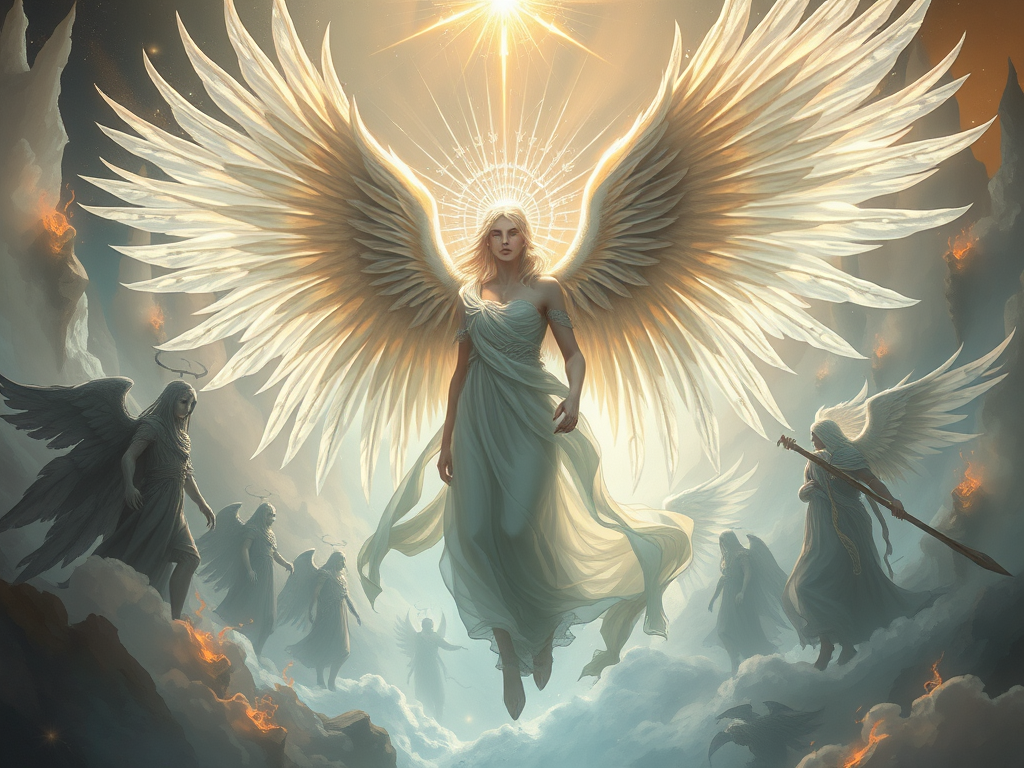
The heavenly assembly looked on in awe.
“SubhanAllah,” whispered the angels in unison. “This is no ordinary creation.”
🌟 The First Words of Man
Adam sat upright, dazed but alive. As instinct moved his tongue, he sneezed—a burst of clay, wind, and now life.
“Alhamdulillah,” he uttered without being taught.
And the Lord responded:
“Yarhamuk Allah” – “May Allah have mercy on you.”
The angels fell into sujood, one by one. Their forms lowered in obedience—not to Adam, but to the command of Allah.
🔥 Azazil Remains Standing
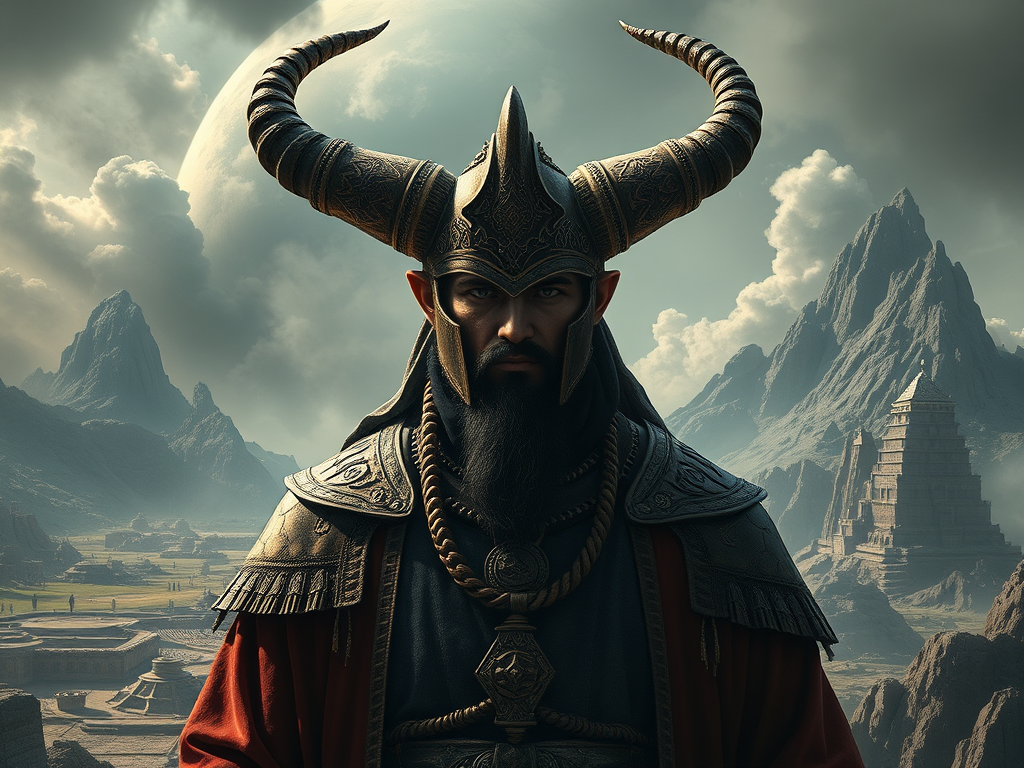
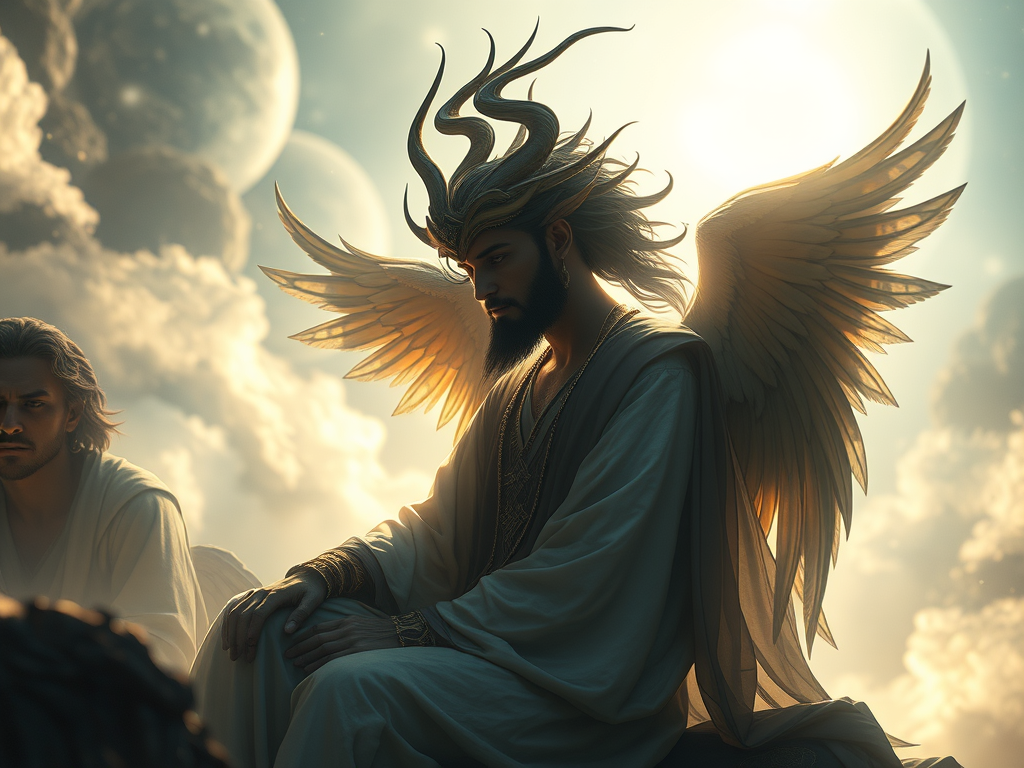
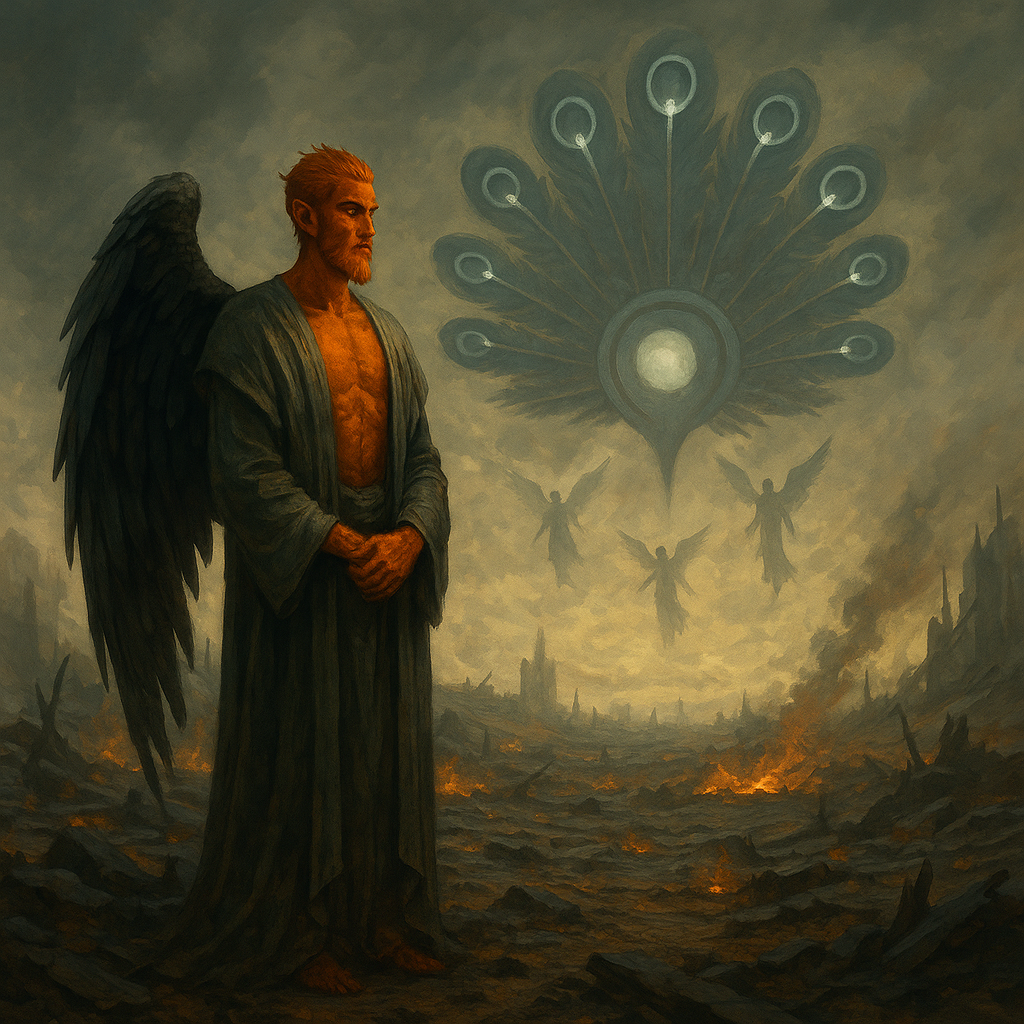
Azazil stood apart, his expression unreadable. The others had bowed in surrender to divine command, but he stood in silence.
“He sneezes, and Allah responds?” he thought. “He speaks, and the heavens echo? Have we not praised Him long before this form was ever shaped?”
Jibril approached him quietly.
Jibril: “You did not bow.”
Azazil did not turn. “I was not commanded—yet.”
Jibril: “But your heart… what does it say?”
Azazil’s silence spoke volumes. A fire was stirring—not the fire of his origin, but one of pride.
💔 The Angels Take Notice
Mikail and Israfil, watching from afar, exchanged glances.
Israfil: “Something in him is changing. That which once made him rise… now weighs him down.”
Mikail: “And still the command has not come.”
The heavens waited. The test had not yet been given—but the seeds of refusal had already taken root.
Azazil walked away, his steps quiet, yet heavy.
“They bowed so easily. But I… I was forged in fire. I cleansed the Earth. I stood when others fell. And now… they bow to him?”
He knew a command would come. And when it did, his heart would already have chosen.
🌓 Sidebar: Lilith vs Layla – Clarifying the Confusion
There exists confusion among modern readers between Lilith, a rebellious feminine figure from Jewish folklore, and Layla, a beloved archetype in Arabic and Sufi literature. Although both names are associated with darkness or night, they represent vastly different origins and meanings.
🔥 Lilith
- Originates in ancient Mesopotamian texts (e.g. Lilītu in Sumerian mythology) and post-Talmudic Jewish folklore.
- Mentioned in The Alphabet of Ben Sira (~8th–10th century CE) as Adam’s supposed first wife who rebelled and was replaced by Hawwa’ (Eve).
- Later demonized in Jewish Kabbalistic texts as a spirit of sexual temptation or child-snatching.
- Not mentioned in the Qur’an or authentic hadith.
- Islamic scholars unanimously reject this narrative as Isra’iliyyat (extraneous Judeo-Christian legends).
🌙 Layla
- Arabic word for “night”, with deep symbolic and literary roots.
- Most famous through the 7th-century tragic romance of Majnun Layla, later reimagined in Sufi literature (e.g. Rumi, Nizami, and Ibn Arabi).
- Represents the Divine Beloved, veiled in mystery.
- Symbol of the soul’s longing for union with the Eternal.
- Has no link whatsoever to Adam or primordial rebellion.
⚠️ Source of the Confusion
- Some modern occultists and mythologists (outside the Islamic tradition) attempt to merge Lilith and Layla due to their associations with the feminine and the night.
- These are syncretic projections, not based on Islamic or classical Arabic scholarship.
✅ Summary
| Name | Rooted in Islam? | Represents | Notes |
|---|---|---|---|
| Lilith | ❌ No | Chaos, rebellion, folklore | From Jewish myth, not Islamic |
| Layla | ✅ Yes (symbolic) | Night, love, divine longing | Symbol in poetry and Sufism |
📚 Sources and Inspirations
Note: The dialogues and introspections presented in this chapter are fictional reconstructions, inspired by themes found in classical Islamic texts and mystical interpretations. They are not direct quotes but reflect the spiritual lessons within the following sources:
- Ibn Kathir, Al-Bidayah wa’l-Nihayah – The breathing of life into Adam and the sujood of the angels.
- Sahih Muslim and Musnad Ahmad – Hadith about Adam sneezing and saying Alhamdulillah, and Allah responding.
- Tafsir al-Tha‘labi – On the angelic response to Adam’s creation.
- Sufi writings – Particularly on the symbolic power of the first speech and divine favor.
- Surah Sad (38:71–72) – “When I have fashioned him and breathed into him of My Spirit…”

















Leave a Reply