
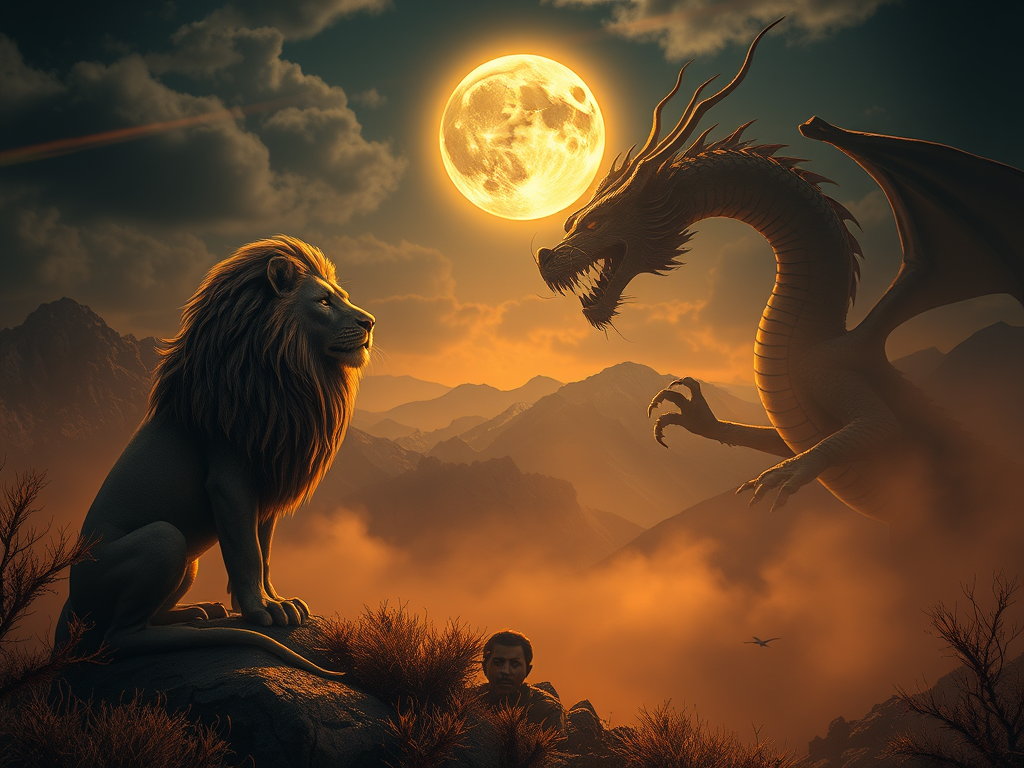
“Scattered by conquest, but remembered in symbols—the lion, the dragon, the moon. What if the Lost Tribes were never lost, only reimagined?”
📜 Introduction: When a People Vanishes
In 722 BCE, the Assyrian Empire crushed the Northern Kingdom of Israel[1], exiling ten of its twelve tribes: Ephraim, Manasseh, Issachar, Zebulun, Naphtali, Gad, Reuben, Dan, Asher, and Simeon.
🏔️ Part I: From Samaria to the Mountains of Khorasan
🧬 The Pashtuns: Bani Israel in the Hindu Kush?
- Tribes like Yusufzai, Afridi, and Levani reflect Israelite names[2].
- Oral genealogies cite descent from King Saul[3].
- Historical sources like Tabaqat-i Nasiri claim the people of Ghor were Bani Israel[4].
🧱 Inscriptions and Linguistic Clues
Hebrew inscriptions have been reported in Afghanistan[5]. Some Pashto words show Hebrew influence[6].
🌊 Part II: Toward the Sea – India and the Golden Peninsula
📍 The Bene Ephraim (India)
They claim descent from the Tribe of Ephraim and observe Torah-based customs[7].
📍 The Bene Israel (Maharashtra)
They trace their origins to a shipwreck, possibly 8th century BCE[8].
📍 Maritime Memory
Historical maritime routes show trade between Arabia, India, and Southeast Asia involving Muslim and Jewish merchants[9].
🦁 Part III: The Lion Motif – Judah’s Shadow in the East
The Lion of Judah is mentioned in Genesis 49:9[10].
“Singha” means lion in Sanskrit. Sang Nila Utama’s vision of a lion is found in Malay annals[11]. Chinese guardian lions were inspired by lions introduced via India and Persia[12].
🐉 Part IV: Dragons and the Memory of Leviathan
The dragon appears in the Bible as: Leviathan – Job 41, Isaiah 27:1 Tannīn – Genesis 1:21, Ezekiel 29:3[13]
Comparable creatures include: Vritra in Vedic texts Tiamat in Babylonian Enuma Elish Chinese Lóng – dragon of heaven and rain
🌕 Part V: Time by the Moon – The Lunar Echo
The Israelites used a lunisolar calendar, aligning months to the moon and years to the sun[14]. This is reflected in modern Jewish, Islamic, and Chinese calendars.
🔚 Conclusion: Were They Ever Truly Lost?
The Lost Tribes may be found in: The Yusufzai of the Hindu Kush The lion legends of Singapura The dragons of China The moonlit rituals of Asia
“If you want to find the tribes, do not look in scrolls—look in lions, dragons, and moons.”
🔜 Episode 2 Preview:
The Children of the Lion – From Ghor to Singapura
- Who was Sang Nila Utama?
- What connects Judah’s lion with Malay kingship?
- And why do the lion and dragon appear at the threshold of forgotten kingdoms?
📚 Footnotes
- 2 Kings 17:6 – Assyrian exile of Israel.
- Nimatullah al-Harawi, Tareekh-e-Khan Jahani.
- Pashtun oral genealogy claims, e.g. Qais Abdul Rashid.
- Minhaj al-Din, Tabaqat-i Nasiri (13th century).
- See reports in Journal of Semitic Studies, Vol. 34.
- Comparison of Pashto and Biblical Hebrew (Dr. Navras Jaat Aafreedi).
- Bene Ephraim community: https://kulanu.org/bene-ephraim
- Bene Israel history cited by Haeem Samuel Kehimkar (1937).
- Malacca and Arab-Jewish maritime trade: Tibbetts, Arab Navigation.
- Genesis 49:9 – “Judah is a lion’s whelp.”
- Malay Annals (Sejarah Melayu), Chapter on Sang Nila Utama.
- Han Dynasty court records, 87 BCE – Lions as tribute from Parthia.
- Leviathan and Tannīn – Isaiah 27:1, Ezekiel 29:3, Job 41.
- Book of Jubilees & Exodus 12:2 – Israelite calendar instructions.





















Leave a Reply