
A single verse in the Quran has sparked centuries of discussion and debate. Sura At-Tawbah [9:30] states:
“And the Jews say, ‘Uzayr is the son of Allah,’ and the Christians say, ‘the Messiah is the son of Allah.’”
While the Christian belief about Jesus is well-documented, the claim about the Jews and a figure named Uzayr is far more mysterious. Mainstream Judaism has no record of ever deifying a person by that name. So, who is he?
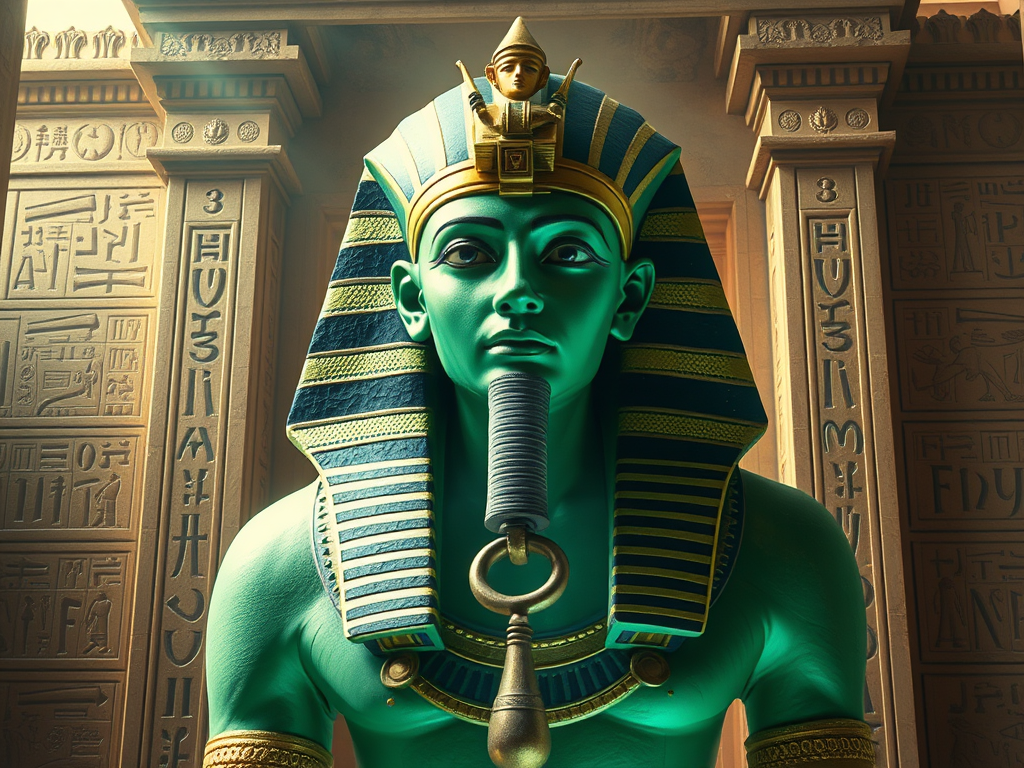
A thought-provoking video from Amen Production’s “The Hakikah Series” delves into this mystery, proposing a radical and compelling theory: that Uzayr is not the biblical prophet Ezra, as commonly suggested, but instead a name connected to the ancient Egyptian deity—Osiris.
🔍 The Problem with the Ezra Theory
The video begins by acknowledging the widespread scholarly view that Uzayr is the Arabic name for the prophet Ezra. This is based on accounts that he was so revered for restoring the Torah after the Babylonian exile, that a small, now-extinct Jewish sect may have elevated him to divine status.
However, the video critiques this theory, pointing out a key issue: there is no substantial historical or theological evidence in Jewish (or even Samaritan) records that Ezra was ever worshipped as a god or called the “son of God.” This turns the Quran’s statement into a historical enigma.
🌍 A Deeper, More Ancient Connection
This is where “Uzayr: A Son of Allah?” pivots to its central thesis. The video argues that we must heed the Quran’s advice to consider the “ancients who disbelieved.” It highlights the deep historical and theological ties between ancient Egypt and the early Israelites.
Prophets like Abraham, Joseph (who became a minister in Egypt), and Moses (raised in Pharaoh’s court) had direct exposure to Egyptian culture. Could the Jews referenced here be a group influenced by Egyptian theology?
The video proposes that ‘Uzayr’ is a linguistic and symbolic echo of Osiris, the Egyptian god of resurrection and eternal life.
⚖️ The Striking Parallels: Osiris and Jesus
One of the most compelling parts of the video is a comparative analysis between Osiris and Jesus—two “sons of god” figures from different cultures. The similarities are too specific to ignore:
| Uzayr (Osiris) of the Jews (Ancient Egypt) | Jesus of the Christians |
|---|---|
| His birth was announced by 3 wise men (the stars of Orion’s Belt), pointing to Sirius in the east. | 3 wise men followed a rising star from the east to witness Jesus’ birth. |
| His flesh was consumed in a communion ritual—cakes made of wheat. | Jesus instituted communion: “eat my flesh and drink my blood.” |
| He was resurrected and became a symbol of eternal life after death. | Jesus rose from the dead and promised eternal life to his followers. |
The video posits that both traditions—one rooted in Egypt, the other in Rome-controlled Judea—feature a celestial annunciation, a sacred meal, and a resurrected savior. These themes echo throughout ancient mystery religions and possibly reflect remnants of a shared mythological past.
🌟 The Lord of Sirius
The video ends with a hauntingly relevant Quranic verse:
“And He alone is the Lord of Sirius.” – Surah An-Najm [53:49]
Sirius, known as the Dog Star, held a pivotal role in ancient Egyptian cosmology—it was seen as the soul of Osiris. Its heliacal rising marked the annual flooding of the Nile, symbolizing resurrection and renewal.
The verse, therefore, is interpreted not just as a random celestial mention, but a bold theological claim: that Allah—not Osiris—is the true Lord of Sirius. It’s a direct refutation of ancient cosmic deification.
🧠 Final Thoughts
This short but dense video presents a provocative reinterpretation of a Quranic mystery. Rather than accepting traditional explanations at face value, it challenges viewers to explore deeper cultural, linguistic, and theological connections—tracing religious echoes across civilizations.
Whether or not one accepts the theory that Uzayr refers to Osiris, the episode offers a gripping lens into how forgotten myths might still echo in divine scriptures—and invites renewed dialogue on long-dismissed perspectives.
























Leave a Reply